Why Does Concrete Settle and Become Uneven?
Why Concrete Settles and Becomes Uneven
All concrete can fail. But there are three primary reasons why it cracks and settles, causing unevenness.
- The soil beneath the slabs is poorly compacted.
- When land developers and builders moved soil around to prepare your home to be built, it's likely that the top layer of fill soil was not as tightly compacted as the native soils below. Once the fill soil settles, the empty pockets forming underneath cause your concrete to crack and fall into the gaps.
- The soil is too dry.
- The second cause is from the drying and shrinking of soil during drought conditions, or even warmer weather when precipitation is low. The slabs eventually begin to crack and sink into the shrinking soil.
- The soil is too wet.
- Opposite to dry soil shrinkage, rainwater that runs through the concrete washes through it, leaving it soft, sometimes eroding it completely, causing the concrete to lose support and sink.
Even if you're experiencing a normal year for weather and precipitation, as water runs through the grid lines in your concrete, the soil underneath the slab starts to weaken. The flow of water eventually washes away the soil, leaving gaps and voids. All concrete has a limited lifespan.
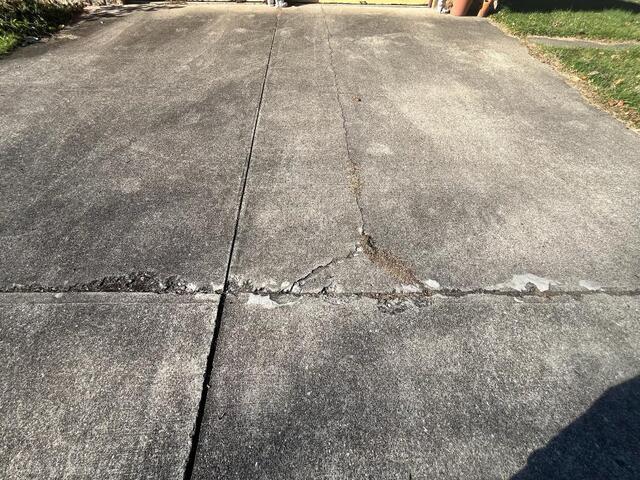
Other Unexpected Reasons Concrete Fails
Slab Expansion
- Concrete can also shrink and expand with the weather. In cold weather, concrete contracts while the joints and cracks widen, collecting the pebbles, sand, and other debris with it. But in warm weather, concrete expands beyond its original size because it's now filled with debris. Even your neighborhood street is creeping into your driveway every year, sometimes pushing your driveway.
- Driveway concrete may buckle and crack. Garage concrete may get pushed back into the home, and in severe situations, cause foundation damage.
Surface Deterioration
- Fun fact: concrete also absorbs water like a sponge, then once the sun comes out, it evaporates. If the temperature drops below freezing, the expanding ice can shatter the microscopic surface pores. This back-and-forth process of absorption and evaporation, freezing and thawing, causes a cracked, pitted, and flaky concrete surface.
- This is what happens when you salt your sidewalk or driveway. The salt doesn't cause deterioration itself; instead, when the ice melts and water refreezes, it leads to damage.
Staining
- Stains and markings are simply caused by nature, like oil, mold, fertilizers, and even dirt. Adding to its deterioration and plain unattractiveness.
Signs Your Concrete is Settling and It's Time to Act
- Uneven slabs are causing you to trip
- Pooling water is freezing and leading to slips or falls
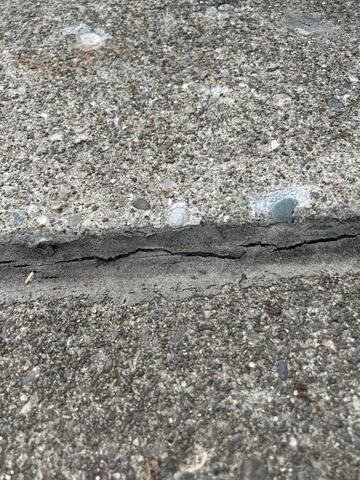
- Pitting, flaking, deteriorating surfaces
- Cracks and gaps along the surface
- Visible voids or "empty pockets" beneath the surface
- Settling/sinking concrete
- Staining and markings
Why You Should Never Ignore Settling Concrete
You'll pay for settling concrete one way or another, even if you don't fix it. Visually, a cracking and settling concrete driveway, sidewalk, pool, or patio area doesn't help curb appeal. Especially if you're looking to sell your home. For safety reasons, you'll want to protect yourself, your family, or seniors close to you from uneven concrete to prevent falls that could lead to painful and costly visits to the doctor. Finally, if left untreated, expanding, deteriorating concrete slabs can lead to more serious problems like costly foundation issues.
How To Repair Your Uneven Concrete
Instead of totally destroying your yard and replacing your concrete, we recommend repairing it. Alford Foundation & Crawl Space Repair uses the PolyLevel system to lift, level, and stabilize sinking concrete. No heavy equipment is necessary. We also use NexusPro Joint Sealant to prevent water from infiltrating through concrete cracks and joints and protect against erosion. Learn more about our concrete repair solutions.