How Do I Know if Wall Cracks Are a Foundation Problem?
Are your wall cracks a foundation problem?
Short answer, very likely.
Wall cracks are one of the most common symptoms your home is settling. While some cracks start small, they grow into large problems when left unchecked. Ignoring them puts not only your home investment at risk but also your family's safety.
Your foundation is the structural base of your home, so it's important to pay attention to early indicators like wall cracks, bowing, shearing, uneven floors, and window sticking--all signs of a foundation problem that won't resolve itself.
You can't prevent your home from settling, but you can get ahead of wall cracks and prevent a costly structural failure.
Why do wall cracks occur?
General Settling
Wall cracks occur due to foundation settlement. Over time, the soil beneath your home struggles to support its weight. As the soil becomes wet and dries, it shrinks. This creates voids and gaps for your home to settle into, producing stress on walls and leading to cracks.
Heavy Rains and Soil Movement
During heavy rain periods, soil can become soft and weak. Your home can sink into the soil. Wall cracks can be the first sign this is happening.
Poorly Compacted Fill Soil
In new or developing neighborhoods, cracks often result from poorly compacted fill soil. If builders remove soil from hilltops to create flat lots without proper compaction, it will eventually compress under the weight. This leads to foundation settlement and wall cracks.
Mother Nature is always working; you should always count on your home moving and settling.
What are the types of wall cracks?
Drywall Cracks
These commonly appear at the corners of doors and windows or follow along drywall seams. This is another sign that your foundation is settling. A small drywall crack may not seem like a big deal, but it will likely turn into a large crack and a more expensive problem for you to fix.
Foundation Wall Cracks
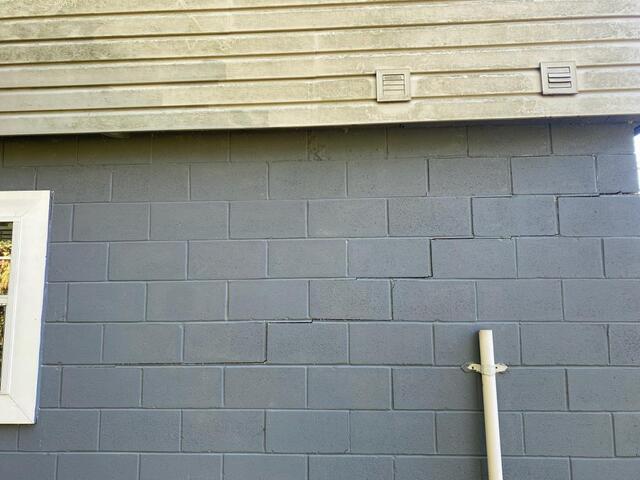
You may see vertical cracks, which are more common, or stair-step cracks in block walls. This is caused by your foundation's movement or settling. It may be harder to spot in a finished basement.
Warning signs your wall crack is a foundation problem
You may be wondering, "Is my wall crack serious?" Understanding the type of crack, where it's located, and co-existing symptoms can help you understand the severity of the problem.
Concrete Block Foundation
Horizontal Cracking
If you see a horizontal crack across the middle of the wall, you may also notice a bowing wall. When the external soil pressure increases, the crack begins to expand and the wall may fail.
Stair-step Cracking at the Corners
Seeing stair-step cracks at the corners of a bowing wall means your problem is worsening. As the wall center bows inward, the corners crack in a stair-step pattern.
Pushing in at the Bottom of the Wall (Shearing)
You may notice the bottom row of blocks in place as the rest of the wall slides inward. The term for this is called "shearing." This needs professional attention.
Learning in at the Top of the Wall
If your concrete block foundation wall is leaning at the top, this is now becoming a serious structural problem. The foundation wall connecting to the framing of the house has been compromised. This occurs only when earlier warning signs have been ignored. This needs immediate professional attention and indicates major structural failure.
Poured Concrete Foundation
Leaning in at the Top of the Wall
Poured foundation walls are more rigid than block, so they're not likely to bow. When soil pressure builds outside the wall, they often lean inward because the wall-to-framing connection is the weakest part of the system. This is dangerous because the top connection can break free if not resolved.
Diagonal Cracking at the Corners
Poured foundation walls may develop diagonal cracks moving upward from the bottom corners as pressure continues to build. This happens since the corners of the wall are braced by adjacent walls, forcing the crack to travel up and in.
When to call in a professional
If you want to get ahead of the issue, call a professional foundation specialist as soon as you notice wall cracks. An expert will be able to complete an inspection, provide an estimate, and take care of your foundation before it becomes a structural issue.
If you see water leaking through cracks, the cracks are widening or spreading, you see bowing walls, or you're planning to sell or buy a home, be sure to call a foundation professional right away. This is detrimental to the structural integrity, value, and safety of your home.
Give Alford Foundation & Crawl Space Repair a call for a free estimate to get started.